
 By Dr. Ashish Agarwal
A healthy heart beats in a regular, coordinated rhythm, ensuring efficient blood flow to every part of the body. However, in some individuals, this rhythm becomes irregular and chaotic, leading to a condition known as Atrial Fibrillation (AF or AFib). Atrial fibrillation is one of the most common heart rhythm disorders seen in clinical practice today and is a significant risk factor for stroke, heart failure, and other cardiovascular complications if left untreated.
According to Dr. Ashish Agarwal, one of the best cardiologists in Dwarka, early diagnosis and timely management of atrial fibrillation can dramatically improve quality of life and reduce life-threatening risks.
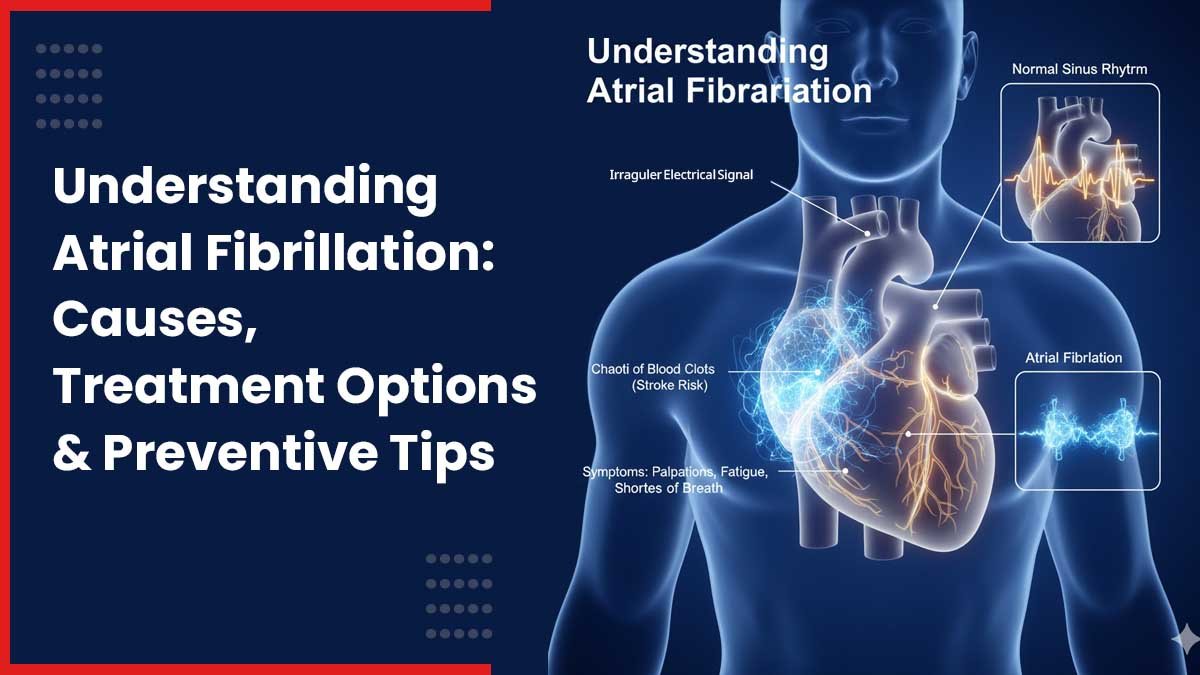
Atrial fibrillation is a condition in which the upper chambers of the heart (the atria) beat in a rapid and irregular manner instead of following a normal rhythm. This irregular electrical activity disrupts the efficient movement of blood into the lower chambers (ventricles), causing poor circulation and increasing the risk of blood clot formation.
AFib can occur intermittently (paroxysmal), persist for longer periods, or become permanent. While some patients experience noticeable symptoms, others may remain unaware of the condition until a serious complication, such as a stroke, occurs.
Atrial fibrillation is often linked to underlying heart disease, but it can also occur in people without any known structural heart problem. High blood pressure is one of the most common contributors, as it puts excessive strain on the heart over time. Coronary artery disease, previous heart attacks, heart valve disorders, and heart failure significantly increase the risk of developing AFib.
Non-cardiac conditions also play an important role. Diabetes, obesity, thyroid disorders, chronic lung disease, sleep apnea, and excessive alcohol consumption can trigger abnormal heart rhythms. Age is another major factor, as the risk of atrial fibrillation rises significantly after the age of 60.
Dr. Ashish Agarwal emphasizes that identifying and treating these underlying causes is crucial for long-term rhythm control and prevention of complications.
The symptoms of atrial fibrillation can vary widely from person to person. Some patients experience a racing or fluttering heartbeat, while others complain of fatigue, breathlessness, dizziness, or chest discomfort. Reduced exercise capacity is another common complaint, as the heart is unable to pump blood efficiently.
In some cases, atrial fibrillation may remain completely silent. These “asymptomatic” cases are particularly dangerous, as the first sign may be a stroke. This is why regular heart check-ups are strongly recommended, especially for individuals with risk factors.
One of the biggest dangers of atrial fibrillation is the formation of blood clots in the atria. These clots can travel to the brain and cause a stroke. In fact, AFib increases the risk of stroke by nearly five times. Over time, uncontrolled atrial fibrillation can also weaken the heart muscle, leading to heart failure.
With expert care from a senior cardiologist in Dwarka like Dr. Ashish Agarwal, these risks can be significantly minimized through timely diagnosis and appropriate treatment.
Diagnosing atrial fibrillation involves a detailed clinical evaluation and heart rhythm assessment. An electrocardiogram (ECG) is the primary tool used to confirm the diagnosis. In some patients, Holter monitoring or event recorders may be advised to capture intermittent episodes.
Additional tests such as echocardiography help evaluate heart structure, valve function, and overall cardiac health. Blood tests may also be performed to identify thyroid or metabolic disorders that could be contributing to the condition.
The treatment of atrial fibrillation is highly individualized and depends on the patient’s symptoms, age, underlying conditions, and stroke risk. The primary goals of treatment are to control heart rate, restore or maintain normal rhythm, and prevent blood clots.
Medications play a central role in managing AFib. Drugs may be prescribed to control heart rate, regulate rhythm, or reduce the risk of stroke through blood thinning. In patients who do not respond well to medications, advanced procedures such as electrical cardioversion or catheter ablation may be recommended.
Under the guidance of Dr. Ashish Agarwal, a leading cardiologist in Dwarka, patients receive evidence-based treatment using the latest advancements in cardiac care, ensuring both safety and long-term effectiveness.
While not all cases of atrial fibrillation can be prevented, adopting a heart-healthy lifestyle can significantly reduce the risk. Maintaining optimal blood pressure, managing diabetes, achieving a healthy weight, and engaging in regular physical activity are essential steps.
Avoiding excessive alcohol intake, quitting smoking, managing stress, and ensuring adequate sleep also play a vital role in preventing rhythm disorders. Regular cardiac evaluations are particularly important for individuals with a family history of heart disease or existing risk factors.
Dr. Ashish Agarwal strongly advocates preventive cardiology, focusing on early detection and lifestyle modification to protect long-term heart health.
Any episode of unexplained palpitations, breathlessness, dizziness, or chest discomfort should not be ignored. Early consultation with an experienced cardiologist can prevent complications and ensure timely treatment.
If you are looking for expert care for atrial fibrillation, Dr. Ashish Agarwal is widely regarded as one of the best cardiologists in Dwarka, offering comprehensive diagnosis, advanced treatment options, and personalized heart care.
Copyright © 2025 Dr. Ashish Agarwal | All Rights Reserved
 The Story Door