
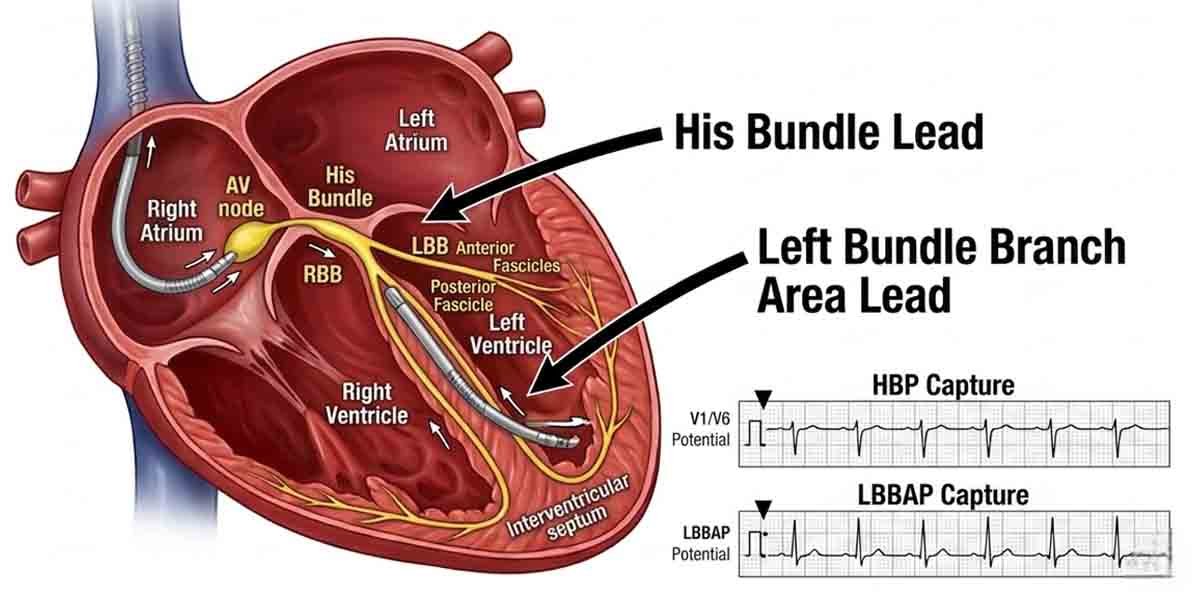
At the forefront of modern cardiac electrophysiology, Dr. Ashish Agarwal continues to bring cutting-edge innovations to patient care. In a remarkable clinical achievement, he successfully performed two back-to-back Conduction System Pacing (CSP) procedures in a single day, demonstrating both technical precision and commitment to delivering the most advanced treatment options.
Both procedures resulted in narrow QRS complexes on ECG, closely resembling a normal physiological heartbeat—an outcome that reflects the true potential of this advanced pacing technique.
Conduction System Pacing is an advanced form of pacemaker therapy that directly stimulates the heart’s natural electrical pathways—specifically the His-Purkinje conduction system. Unlike traditional right ventricular pacing, which can disrupt the natural sequence of cardiac activation, CSP ensures a more synchronized and physiological contraction of the heart.
By preserving the natural conduction pattern, CSP produces ECG tracings that appear almost normal, which was clearly observed in these recent cases handled by Dr. Ashish Agarwal.
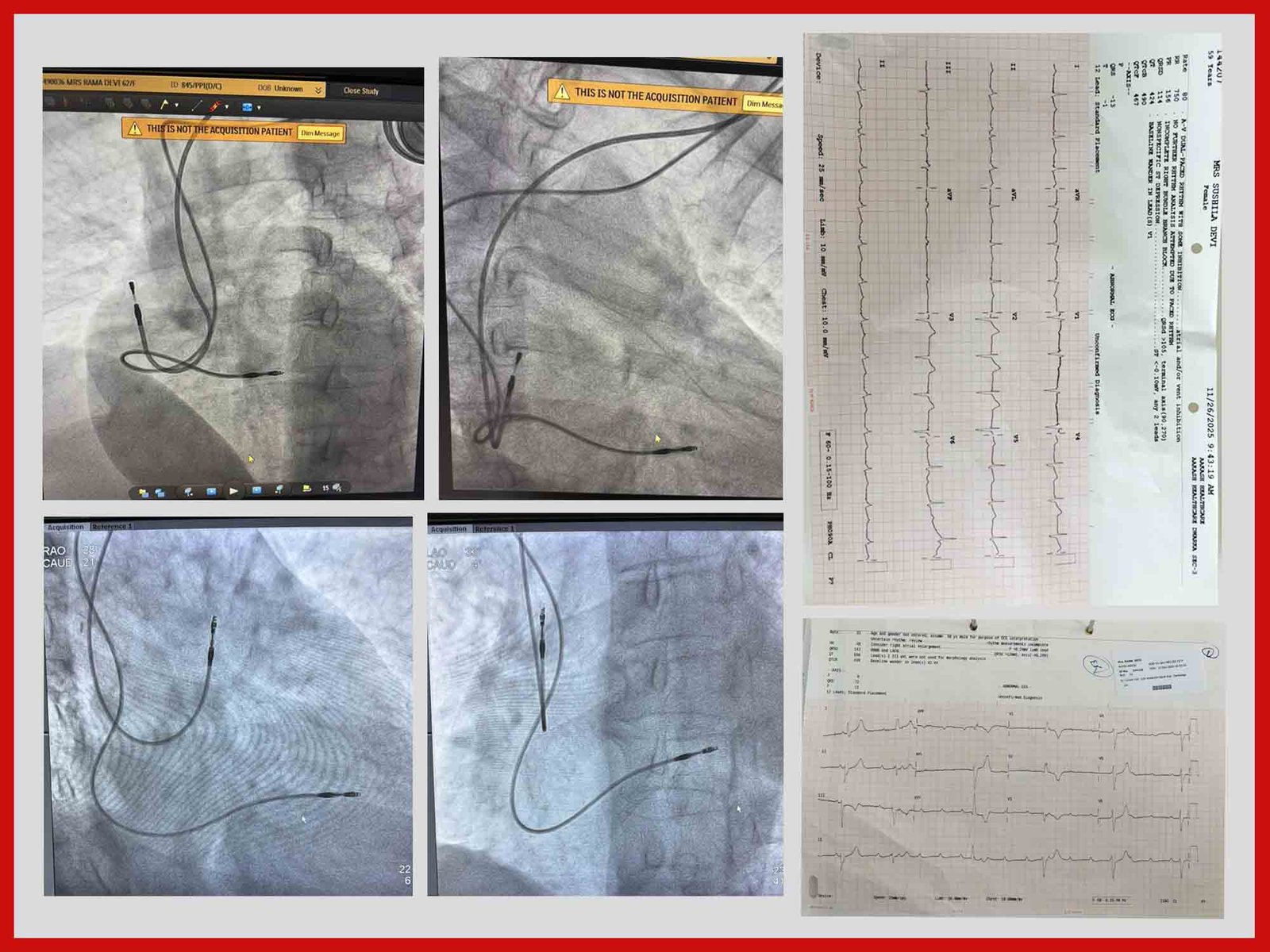
One of the most significant indicators of successful CSP is the presence of a narrow QRS complex. In both procedures, Dr. Agarwal achieved this outcome, highlighting accurate lead placement and effective capture of the conduction system.
This is particularly important because conventional pacing methods often lead to ventricular dyssynchrony, which can negatively impact heart function over time. CSP, on the other hand, maintains coordinated contraction, supporting better cardiac performance.
Dr. Ashish Agarwal strongly advocates for Conduction System Pacing in suitable patients, especially younger individuals who may require long-term pacing support. The benefits are significant and long-lasting:
For patients who depend on pacing for years or decades, these advantages make a meaningful difference in overall heart health and quality of life.
Performing two CSP procedures consecutively with excellent outcomes is a testament to Dr. Ashish Agarwal’s expertise in advanced cardiac pacing techniques. CSP requires precise mapping, careful lead positioning, and deep understanding of cardiac electrophysiology—skills that come with experience and specialization.
His ability to consistently achieve near-normal ECG patterns reflects a high level of procedural success and patient-focused care.
With growing clinical evidence and successful outcomes like these, Conduction System Pacing is rapidly becoming the preferred approach in modern cardiology. Dr. Ashish Agarwal remains committed to adopting and advancing such techniques to ensure his patients receive the most physiological and effective treatment available.
The successful completion of two back-to-back Conduction System Pacing procedures with near-normal ECG results highlights not just a clinical milestone, but a shift toward more natural and patient-friendly cardiac care.
Through innovation, precision, and dedication, Dr. Ashish Agarwal continues to redefine standards in cardiac pacing—offering patients safer, smarter, and more sustainable solutions for lifelong heart health.
Schedule a consultation with our experienced cardiologist and take the first
step towards a healthier, stronger you.
Copyright © 2025 Dr. Ashish Agarwal | All Rights Reserved
 The Story Door